Why AI Agents Fail in Production (And What to Do About It)
You built a demo that works. The LLM calls the right tools, chains the steps correctly, and produces exactly the output you expected. You show it to the team. Everyone is impressed. Then you try to run it in production and within a week it is broken in ways you did not anticipate.
This is not a story about a bad model. It is a story about missing infrastructure.
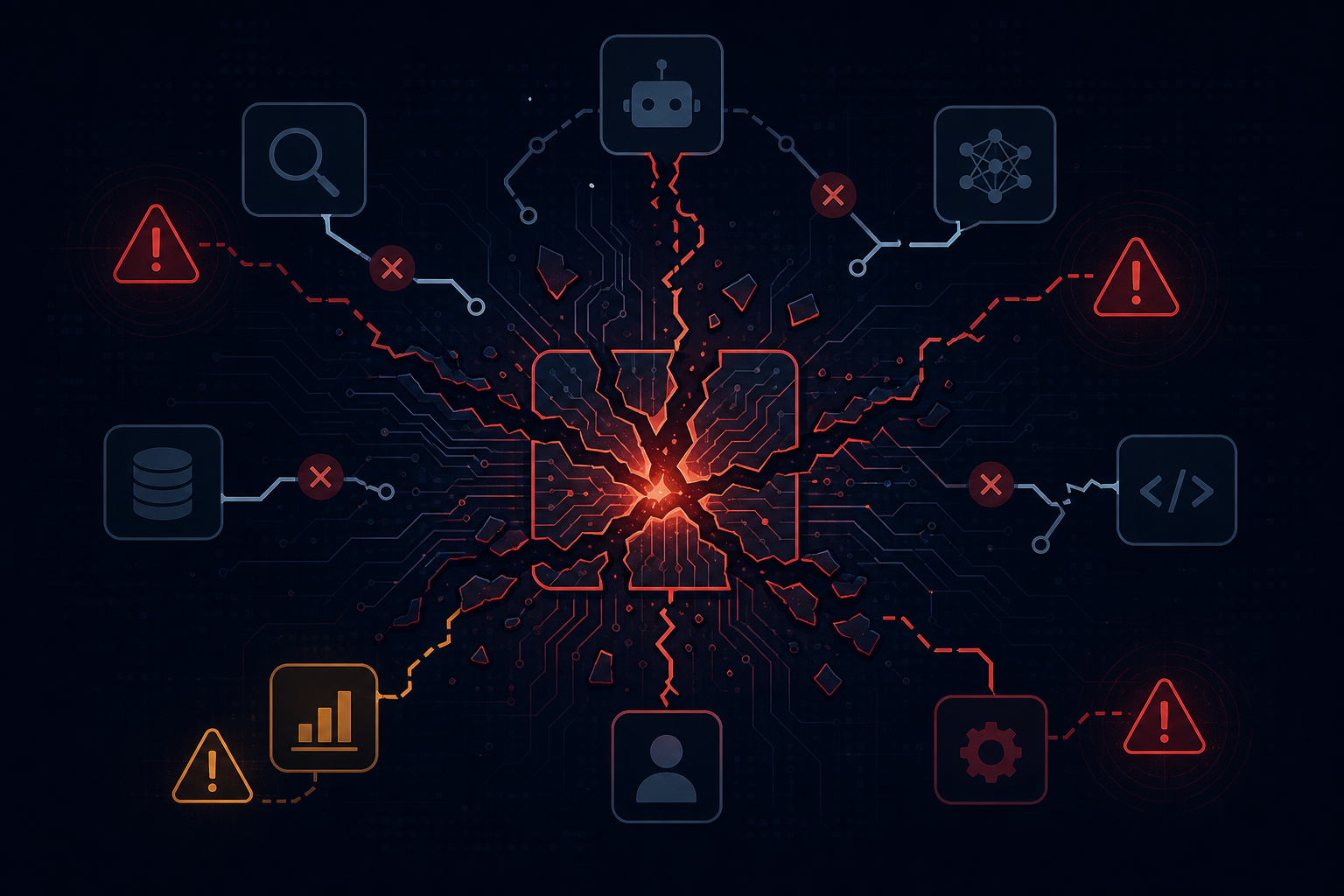
The four failure modes nobody talks about
1. Crashes lose everything
Most agent scripts are stateless in the wrong way. When a worker process dies halfway through a multi-step workflow — a network timeout, a container restart, a memory limit — the entire run is gone. There is no record of what completed and what did not. The next retry starts from scratch, which may mean sending the same email twice, charging a customer twice, or calling a third-party API in a way that has irreversible side effects.
The fix is not "catch exceptions." The fix is durable, event-sourced execution where every step completion is committed to a persistent store before the next step begins.
2. Retries cause duplicate execution
Timeouts and retries are the right instinct. But without idempotency, a retry after a network failure that actually succeeded will execute the action a second time. This is how production incidents become billing incidents.
Every external call in a reliable agent runtime needs an idempotency key — a stable identifier that lets the system know this exact operation has already completed, even if the network response was lost.
3. There is no record of what happened
When an agent misbehaves in production — and it will — you need to understand exactly what it did, what inputs it received at each step, what the LLM returned, and what tool it called with what arguments. Without structured traces, you are debugging from memory and inference.
OpenTelemetry-based tracing at the workflow step level is not a nice-to-have. It is the thing that makes AI agents auditable, debuggable, and safe to put in front of compliance teams.
4. Credentials sprawl
Keys live in .env files, get committed to repos, get passed as environment variables through three layers of Docker, and eventually leak. For AI agents calling external tools — Stripe, Salesforce, internal APIs — credential management needs to be treated with the same seriousness as in any production backend service. Transit-encrypted storage, per-key scoping, and least-privilege access per workflow.
What reliable agent infrastructure looks like
A production-grade AI agent runtime needs to provide:
- Durable execution — every step committed before the next begins; crashes are recoverable
- Idempotency — replay safety for every external call
- Structured observability — distributed traces, structured logs, run history
- Credential isolation — secrets in a vault, scoped per MCP tool, never in code
- Human oversight — pause/approve gates for decisions that need review before they cause harm
These are not new ideas. Distributed systems engineers solved them for service-to-service calls fifteen years ago. AI agents are just the latest runtime that needs them.
The opportunity cost of DIY
The temptation is to build these pieces yourself. And most teams do — for a while. They write a retry loop, add some logging, move the API key to an environment variable. Then the on-call engineer hits a stuck workflow at 2am with no trace and no replay capability, and the cost of not having real infrastructure becomes very concrete.
Building durable, idempotent, observable workflow infrastructure is roughly 60% of the engineering required to run AI agents reliably. That is time not spent on the actual agent logic your business cares about.
The teams shipping reliable AI agents in production are not doing it by writing better glue code. They are doing it by treating agent orchestration as the infrastructure problem it actually is.
AgentRuntime is built to handle exactly these failure modes — durable execution on Redis Streams and PostgreSQL, per-step OpenTelemetry traces, HashiCorp Vault credential management, and a human-task bus for approval gates. Join the waitlist to get early access.